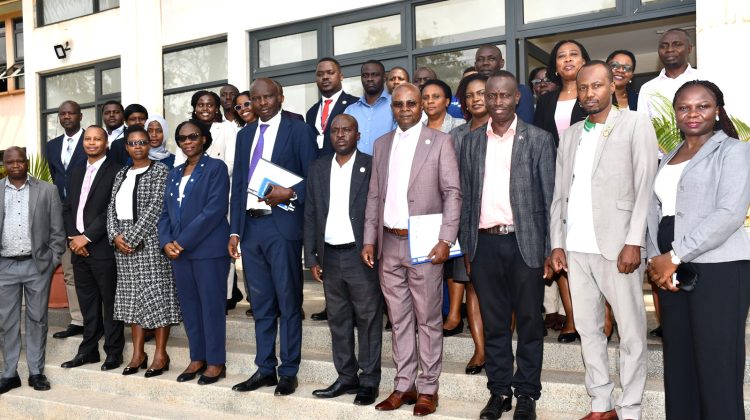
Parliament, MoFPD and Makerere Launch Five-Day Training on Integrated Macroeconomic Modelling to Strengthen Fiscal Oversight
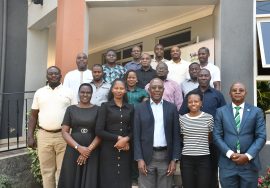
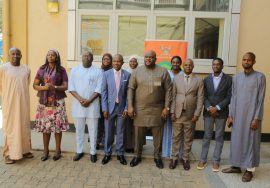
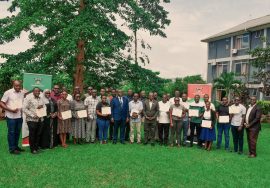
In a significant step toward strengthening fiscal governance and enhancing evidence-based decision-making, the Parliament of Uganda, in collaboration with the Ministry of Finance, Planning and Economic Development and Makerere University, has launched a five-day intensive training programme on Integrated Macroeconomic Modelling.
The training brings together staff of the Parliamentary Budget Office (PBO) for a comprehensive capacity-building programme designed to deepen their analytical expertise in assessing national budgets, evaluating fiscal policy options, and generating independent, data-driven advice for Members of Parliament. The initiative forms part of a broader institutional strategy to reinforce Parliament’s oversight role and ensure that national budgeting processes are aligned with Uganda’s development priorities as articulated in the National Development Plan and Parliament’s Strategic Plan.
Strengthening Evidence-Based Fiscal Oversight
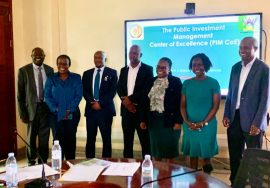
Speaking at the opening session on behalf of the Manager of the Public Investment Management (PIM) Centre of Excellence at Makerere University, Dr. Peter Babyenda emphasized that the increasing complexity of Uganda’s fiscal environment demands stronger analytical capacity within Parliament.
“This training comes at a critical time when the demands on Parliament to undertake rigorous scrutiny of fiscal and economic policy have never been greater,” Dr. Babyenda stated.
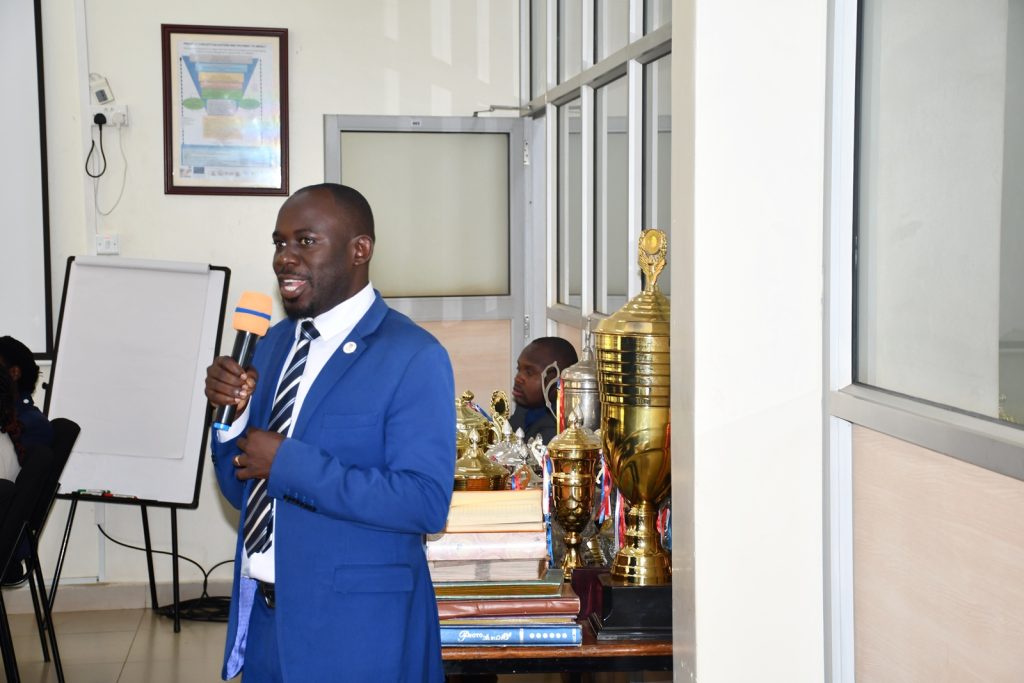
He noted that Parliament’s constitutional mandate—to legislate, appropriate public funds, and oversee government expenditure—requires objective, independent, and technically sound economic analysis. The Parliamentary Budget Office plays a central role in fulfilling this mandate by providing Members of Parliament with timely assessments of revenue projections, expenditure allocations, public debt sustainability, and macroeconomic trends.
Dr. Babyenda explained that the Government’s Integrated Macroeconomic Model provides a holistic framework for understanding the interconnections between economic growth, fiscal policy, public investment, inflation, debt dynamics, and household welfare. By incorporating this model into parliamentary analysis, the PBO will be better positioned to simulate alternative policy scenarios and assess their short- and long-term implications.
Institutional Priorities
Mr. Henry Waiswa, Deputy Clerk to Parliament in charge of Corporate Affairs, contextualized the training within Parliament’s broader institutional reform agenda. He underscored Parliament’s constitutional responsibility to legislate, allocate resources, and oversee the management of public finances.
“Since its establishment under the Budget Act and its anchoring under the Administration of Parliament Act, the Parliamentary Budget Office has become a cornerstone of evidence-based fiscal oversight,” Mr. Waiswa noted.
He observed that Uganda’s public financial management landscape has become increasingly complex, with evolving fiscal pressures, development financing needs, and global economic uncertainties. In such an environment, Parliament must not only examine headline budget figures but also anticipate the macroeconomic and distributional effects of policy decisions on households, businesses, and vulnerable communities.
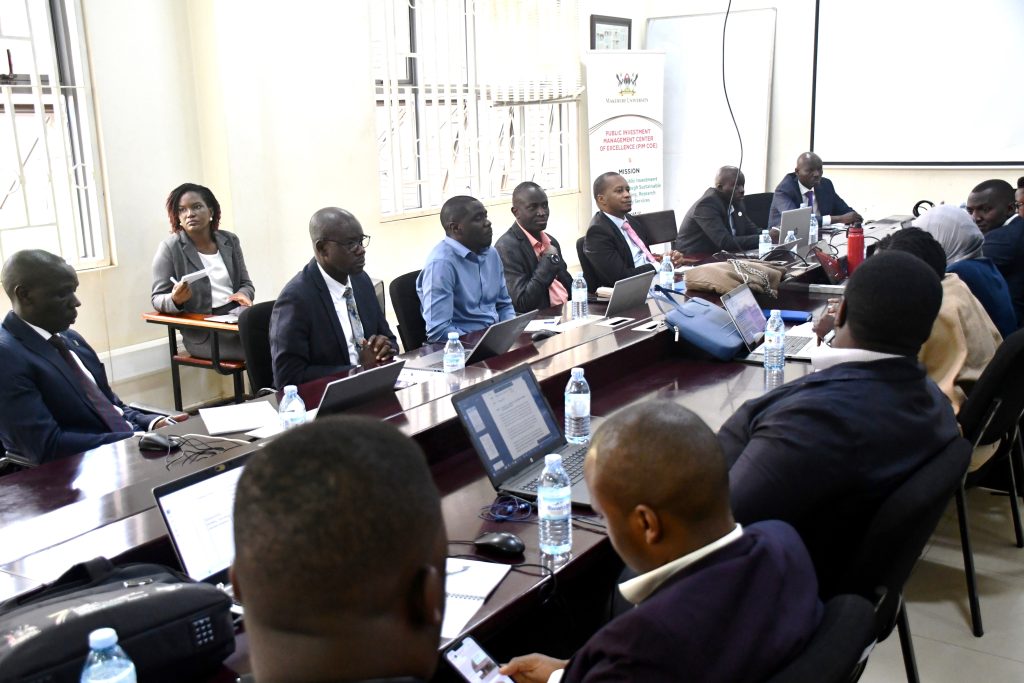
Mr. Waiswa further expressed appreciation to the Ministry of Finance, Makerere University, and the Resource Enhancement and Accountability Programme (REAP) for their technical and financial support in designing and facilitating the training.
Academic Expertise and Analytical Rigor
Professor Edward Bbaale, Director of the PIM Centre of Excellence at Makerere University, highlighted the critical role of academia in strengthening public sector institutions. He emphasized that collaboration between Parliament, the Ministry of Finance, and Makerere University reflects a shared commitment to improving the quality of fiscal governance.
“When our key public institutions work together, we enhance the credibility of economic management and ensure that policy decisions are informed by rigorous analysis,” Professor Bbaale said.
He explained that Integrated Macroeconomic Models combine key economic indicators, such as Gross Domestic Product (GDP), government revenue and expenditure, inflation, debt, investment, and external balances, into a unified analytical framework. These models enable analysts to conduct “what-if” simulations, test policy assumptions, and evaluate trade-offs between competing fiscal priorities.
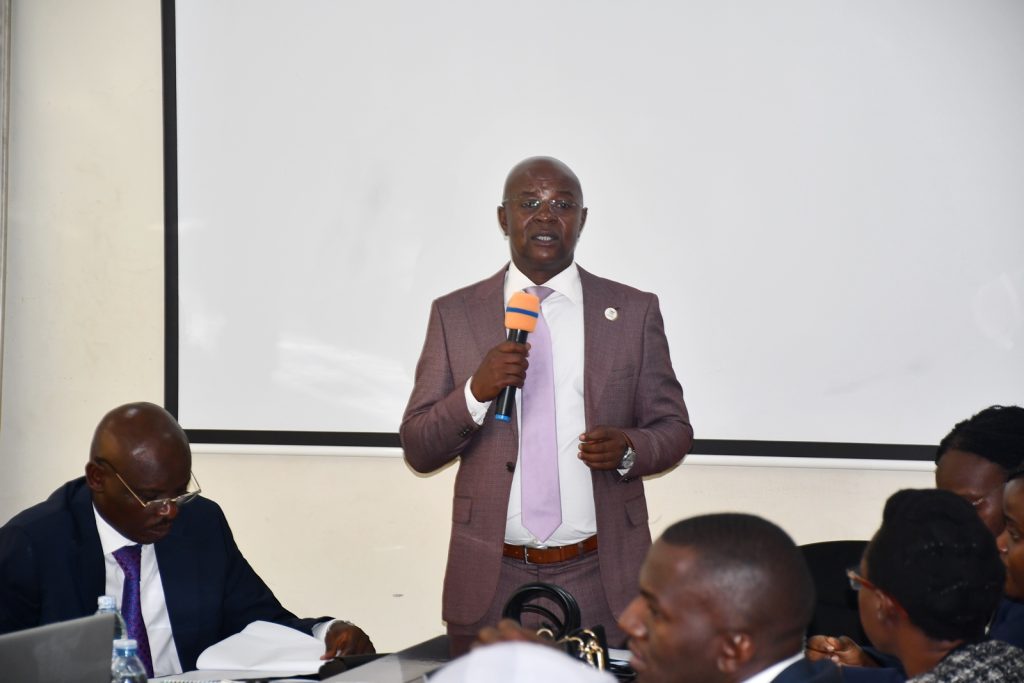
Professor Bbaale urged participants to fully utilize the five-day training to strengthen their technical proficiency and contribute meaningfully to Parliament’s oversight function.
Practical Application and Long-Term Impact
The training programme emphasizes hands-on learning, allowing participants to work directly with the Integrated Macroeconomic Model. Through practical exercises, PBO staff will learn how to:
- Simulate alternative fiscal and macroeconomic scenarios.
- Assess revenue and expenditure implications of policy proposals.
- Evaluate public debt sustainability and fiscal risks.
- Examine distributional impacts on poverty, inequality, and household welfare.
- Develop evidence-based policy briefs for Members of Parliament.
Dr. Babyenda reiterated that the value of the training lies in its practical application.
“The ultimate measure of success will be how effectively participants apply these tools to real parliamentary analysis,” he said. “It is through this application that Parliament can maintain rigorous oversight over public finances.”
A Strategic Investment in Institutional Capacity
By institutionalizing the use of Integrated Macroeconomic Modelling within the Parliamentary Budget Office, Uganda is making a strategic investment in sustainable institutional capacity. The initiative ensures that parliamentary analysts are trained using the same analytical frameworks applied in national fiscal planning, thereby reinforcing both technical quality and independence in budget scrutiny.
As Uganda navigates evolving economic challenges, the strengthened capacity of the PBO will enable Parliament to critically evaluate budget proposals, anticipate policy outcomes, and provide informed, transparent, and accountable oversight of public resources.
The five-day Integrated Macroeconomic Modelling training thus represents a pivotal milestone in advancing Uganda’s commitment to sound fiscal management, democratic governance, and evidence-based policymaking.